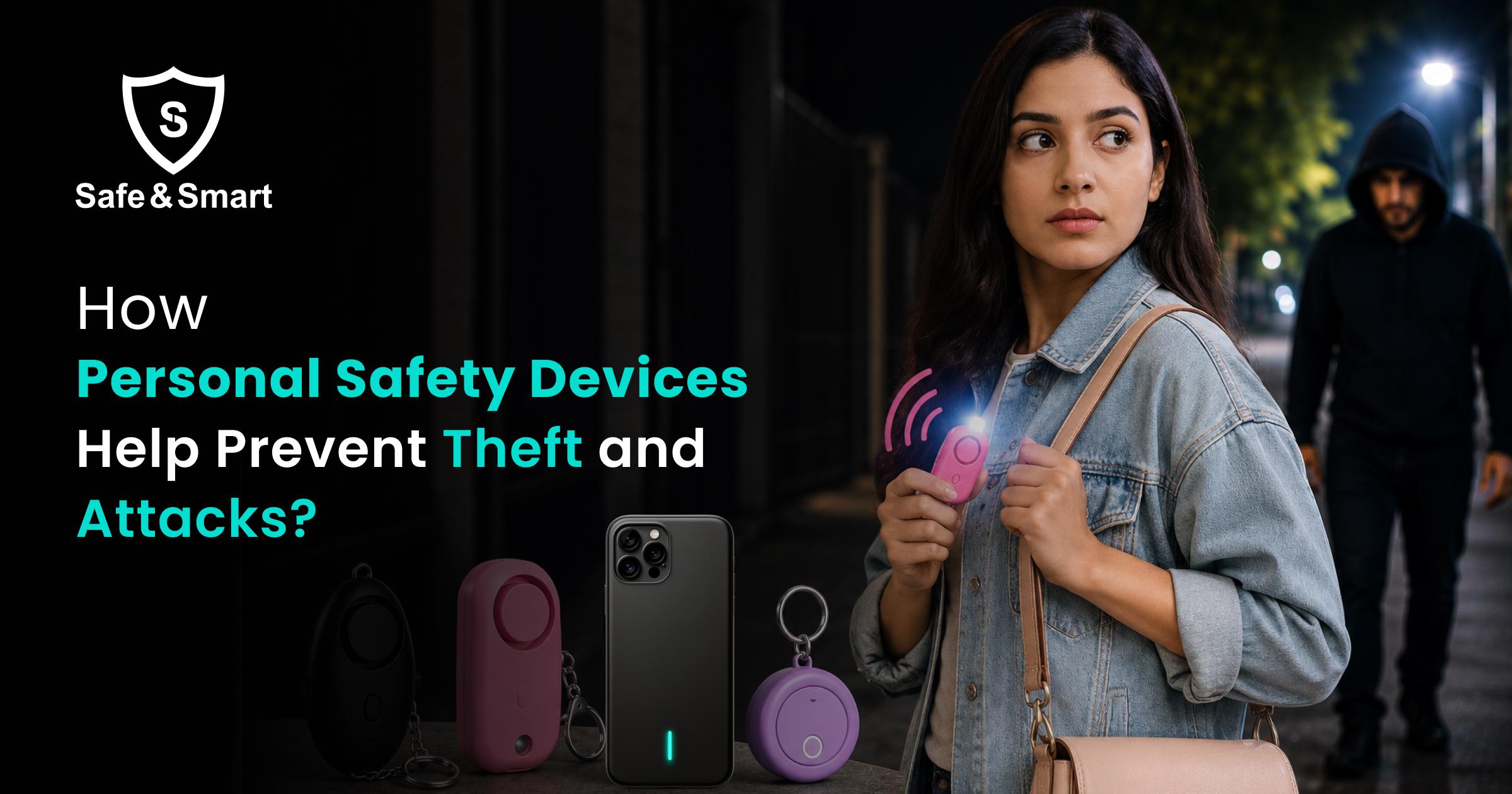
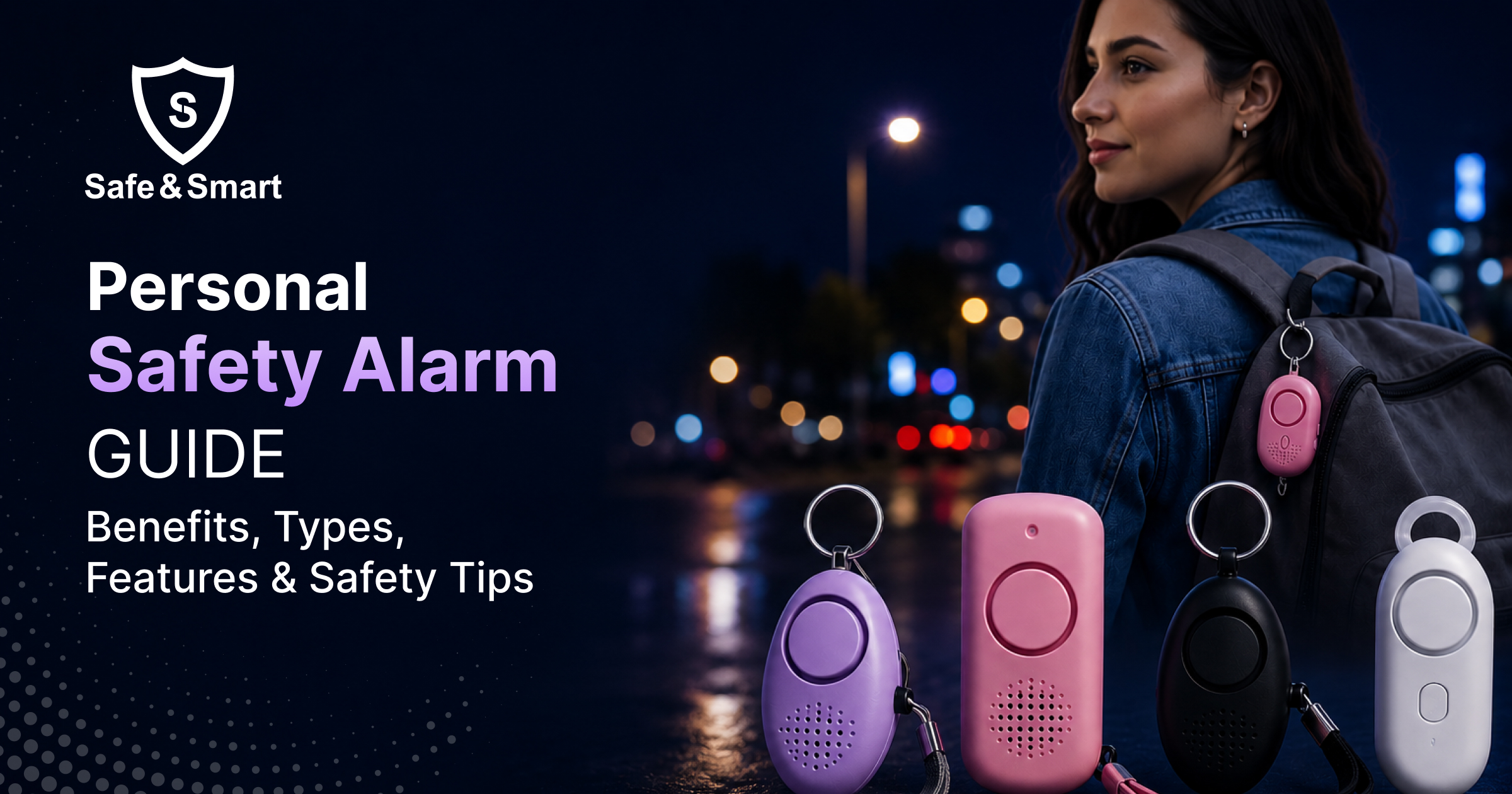
Let's be honest, most of us don't think about personal safety until something happens. A friend gets mugged walking back from the station. A colleague gets followed to their car after a late shift. Or you find yourself in an unfamiliar area at night, phone in hand, suddenly wishing you had more than a torch app.
That’s where personal safety devices come in. Not as a replacement for common sense, but as an extra layer of protection you can actually rely on when things go sideways.
The numbers back this up. According to Fortune Business Insights, the global smart personal safety and security device market was valued at USD 45.22 billion in 2025 and is projected to grow to USD 50.04 billion in 2026. In the UK specifically, the market is forecast to reach USD 2.37 billion by 2026. That kind of growth doesn’t happen unless people genuinely feel the need for these tools.
This guide covers what personal safety devices actually are, how they work in real situations, what to look for when buying one, and why your phone alone isn’t enough.
What Are Personal Safety Devices?
At the most basic level, personal safety devices are small, portable tools built to do one thing well get you help fast when you need it.
Some are dead simple: pull a pin, trigger a 130 dB alarm, and suddenly everyone nearby knows something is wrong. Others are far more sophisticated, GPS-enabled, app-connected, and capable of sending your live location to emergency contacts with a single button press.
The range is wide. You’ve got personal alarms designed to clip to a bag or keychain, wearables that sit on your wrist, and compact units small enough to disappear into a jacket pocket. The best personal safety devices today do several things at once: a loud alarm, location sharing, and an SOS alert without being complicated to use.
They’re popular with students, lone workers, elderly people living independently, and commuters. But there’s no question that demand for personal safety devices for women is particularly high, and for understandable reasons. Women face a disproportionate level of risk in public spaces, and having a device that can draw immediate attention or alert someone to your exact location is genuinely useful.
Take a look at what’s available through smart care products if you want a sense of what the better end of the market looks like.
How Do These Devices Help You Stay Safe During Emergencies?
The honest answer is “in a few different ways, depending on the situation.” Below are some of the reasons that make personal safety devices essential at the time of emergencies:
- They stop things before they start. A lot of attacks are opportunistic. Someone spots a target they think won’t make noise, won’t draw attention, won’t fight back. The moment you activate a personal safety device or even visibly have one, that calculation changes.
- They alert people without you having to speak. If someone is close to you and threatening you, pulling out your phone and calling 999 might make things worse. A device that sends an automatic SOS, including your location, to pre-set contacts the moment you press a button is a completely different kind of response
- They share your location in real time. A built-in GPS tracking device means the people who need to know where you are actually know even if you can’t tell them. That’s critical when you’re in a situation where speaking could escalate things or where you simply can’t get to your phone.
The point is, personal safety devices don’t just react after something goes wrong. They change the dynamics before, during, and after a threat.
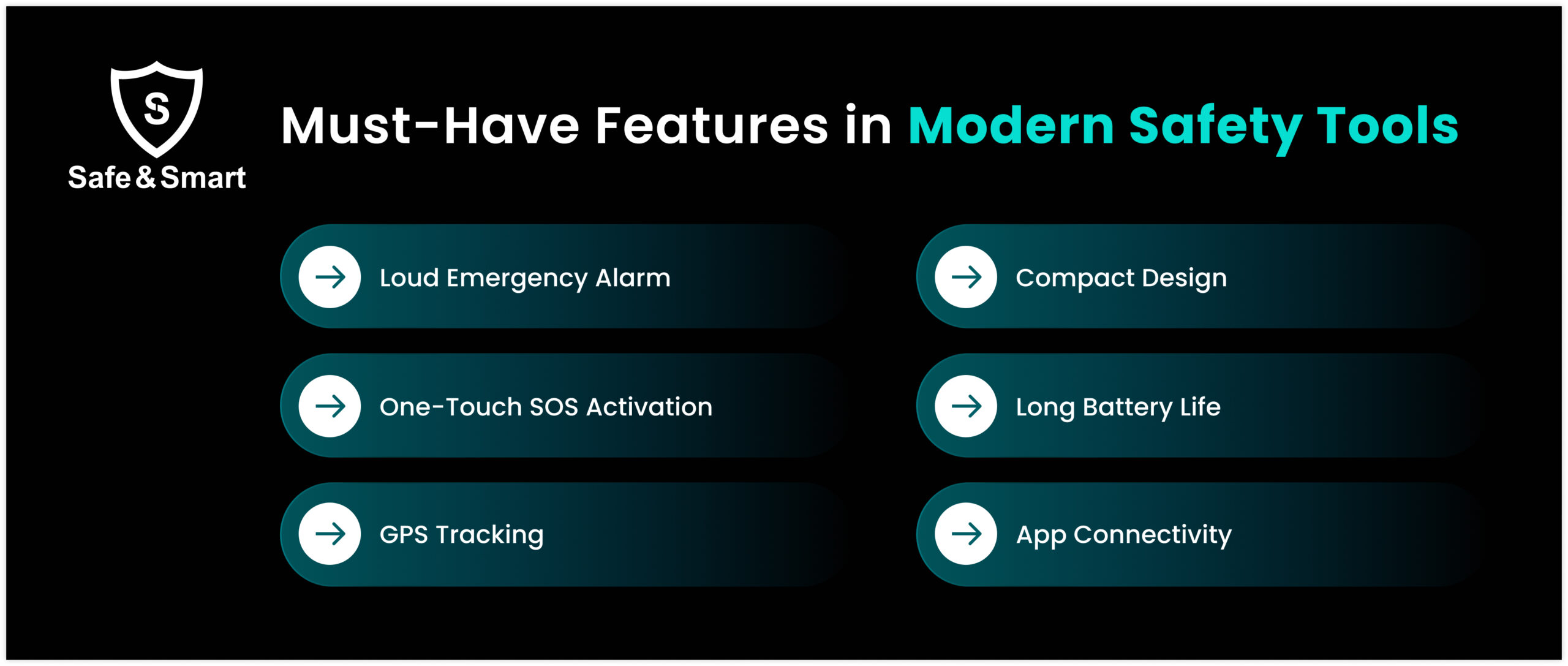
Must-Have Features in Modern Safety Tools
There’s a lot of cheap, underwhelming stuff on the market devices that look fine in a product photo and fall apart the moment you actually need them. Here’s what genuinely matters.
1. Loud Emergency Alarm
You want at least 120 dB. That’s loud enough to cut through traffic, a busy street, or a car park. Many better self defense devices push to 130–140 dB, which is genuinely startling to anyone nearby. Don’t settle for something that sounds like a car horn from three meters away.
2. One-Touch SOS Activation
When you’re scared, your fine motor skills go out the window. A device that requires multiple steps to activate is a device that won’t get activated in time. Pull a pin, press one button that’s it. Anything more complicated is a design flaw.
3. GPS Tracking
This is what separates a proper personal safety device from a fancy noisemaker. Real-time GPS means your contacts can see where you are. That’s not just useful in attacks; it matters if you’ve had a fall, a medical episode, or you’re simply somewhere unfamiliar and something feels off.
4. Compact Design
If it’s not on you, it can’t help you. Simple as that. The best personal safety devices are small enough that carrying them becomes automatic: clipped to a bag, attached to keys, or worn on a wrist. If you’re thinking about it every time you go out, you’ll eventually stop taking it.
5. Long Battery Life
A dead device is just dead weight. Look for something with multi-day battery life, ideally with a low-battery notification built in. USB-C charging is a plus one less cable to worry about.
6. App Connectivity
A good companion app is what makes a personal safety device for women (or anyone, really) genuinely useful day to day. Manage your emergency contacts, check your location history, and customize when and how alerts are sent. The app is what ties everything together.
Personal Safety Devices vs. Standard Phone Alarms – What’s the Difference?
This comes up a lot. “Can’t I just use my phone?” Technically, yes. Practically, not really.
- Speed is the main issue: Getting into your phone, finding the right app, and hitting the right button under stress takes ten to fifteen seconds at minimum. A dedicated personal safety device activates in under a second. In a threatening situation, that gap matters enormously.
- Phones fail at the worst times: Low battery, no signal, dropped on the ground, grabbed out of your hand. Phones are fragile and unreliable in exactly the scenarios where you need reliability. Self defense devices are built to be simple and robust precisely because their one job is to work when everything else is going wrong.
- The alarm itself is different: Your phone’s emergency alert is not the same as a 130 dB siren going off half a meter from someone’s ear. One draws attention. The other causes genuine alarm, which is the point.
- Discreet activation matters: Many personal safety devices can be triggered without looking at them or making any visible movement. If someone is standing close to you in a threatening way, reaching for your phone is obvious. Squeezing a device in your pocket isn’t.
- Dedicated GPS and SOS just work better: Some phones have emergency SOS built in, but it requires setup and doesn’t always behave predictably. Devices designed specifically for this purpose are faster, more consistent, and don’t depend on you having done everything correctly beforehand.
Your phone is good for a lot of things. Being your primary safety tool in a physical threat isn’t really one of them.
When and Where Should You Use Personal Safety Devices?
Realistically, any situation where you feel even slightly uncertain about your safety is a valid reason to have one active and accessible. But there are a few situations where they’re particularly worth having.
1. While Walking Alone at Night
The obvious one. Dark streets, poor lighting, not many people around. A people safe device on your bag or wrist means you can trigger help immediately if someone makes you uncomfortable without needing to stop walking or get your phone out.
2. During Daily Commutes
Train stations, bus stops, multistorey car parks all common spots for opportunistic theft and harassment. Having a personal safety device on you means you’re not relying on bystanders to notice or react. The device does that for you.
3. When Travelling or Exploring New Places
You don’t know the area. You might not speak the language well. You don’t know who’s around or what the local emergency number is. A compact self defense device takes up almost no room in a bag, and it works regardless of where you are.
4. In Crowded Areas
Counterintuitively, crowds can be risky. Pickpocketing and physical harassment both happen frequently in festivals, markets, and busy transit hubs precisely because the chaos makes it easy to go unnoticed. A personal safety device that can immediately draw attention is a useful thing to have.
5. During Emergency Situations
Not just attacks medical emergencies too. If you collapse, have a fall, or find yourself in an accident, a one-touch SOS that broadcasts your location is potentially life-saving.
6. At Work or Late Shifts
Night-shift workers, healthcare staff, lone retail workers, delivery drivers, and people who work alone or in low-staffed environments at unsociable hours face real risk. A Safety Keychain or small wearable is something many employers are starting to recognize as a basic duty of care, not a luxury.
How Safe&Smart Personal Safety Devices Keep You Protected 24/7?
If you’re looking at the best personal safety devices available in the UK right now, Safe&Smart is worth a proper look. They’ve built their range specifically around the real-world situations people face, not the sanitized version of personal safety that ends up as a product nobody actually carries.
Advanced Safety Features
The devices combine high-decibel alarms with automatic SOS triggers, both working together, not as separate functions. There’s no awkward two-step process. You press it, and it responds.
Real-Time Location Tracking
Every Safe&Smart device includes integrated GPS. Your nominated contacts know where you are, updated in real time. Whether you’re commuting, traveling, or working a late shift, that location data goes out the moment you need it, which is why these rank among the best personal safety devices for women and lone workers on the market.
Instant Emergency Alerts
One touch sends an alert with your exact GPS coordinates to your pre-selected contacts. Particularly important for anyone who might not be able to speak during an incident. This is what proper self defense devices should do respond faster than you can think.
User-Friendly Mobile App
The companion app is straightforward to use. Add emergency contacts, see location history, tweak the alarm settings, and check battery status. It turns the device from a standalone alarm into something that actually integrates with how you live.
Compact and Stylish Design
They’re small enough that you’ll actually carry them. That sounds like a low bar, but a lot of safety products are uncomfortable or awkward enough that people leave them at home. Safe&Smart’s range covers keychains, wearables, and pocket-sized units something for how you actually move through the world. Browse their full people safe device range to see what fits.
Conclusion
Personal safety isn’t about being paranoid. It’s about being realistic. Things happen sometimes in places you’d never expect, to people who thought they didn’t need to worry. Personal safety devices won’t prevent every bad situation, but they shift the odds meaningfully in your favor. The market is growing fast because the need for these self defense devices is genuine. Don’t wait until something gives you a reason to start thinking about this. Get something, keep it on you, and know how to use it.
FAQ
Do personal safety devices work without the internet?
Yes, there are many personal safety devices that do not rely on the standard Wi-Fi or home broadband to function. However, they do need a communication network to send alerts with built-in cellular SIM cards or satellite signals.
Can personal safety devices be carried on flights?
Yes, personal safety alarms and alarms without aerosols are generally permitted on flights, but non-lethal defense items like pepper spray and stun guns are strictly prohibited on all flights.
How long do safety device batteries typically last?
The safety device batteries last anywhere from 1 to 10 years; that depends heavily on the type of device, the battery chemistry and how frequently the device transmits or activates.
Are these devices useful for travelers?
Yes, personal safety devices are very useful for travelers because they provide reassurance, physical protection, and practical ways to secure belongings and living spaces.
Are personal safety devices legal to carry in the UK?
In the UK, you can carry non-offensive safety tools like personal alarms or wearable GPS. If you carry anything explicitly for self-defense, it is illegal.
Which personal safety device is best for women in the UK?
The best personal safety device depends on your routine, but the UK’s most trusted and police-approved solutions include compact alarms, wearable GPS button and smartphone apps.