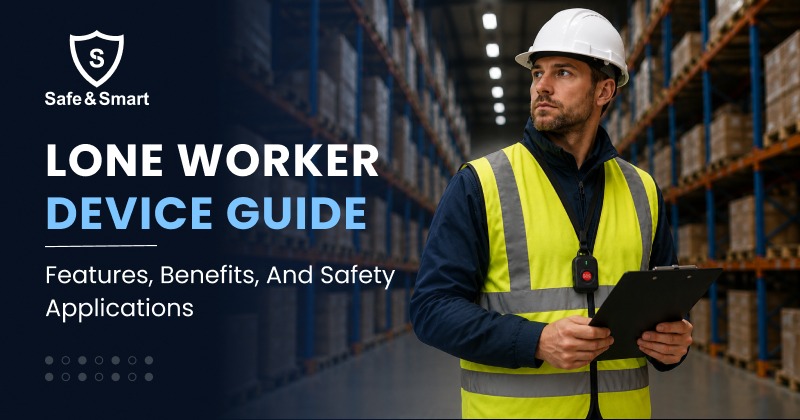
Working alone is more common than most people realize. A nurse doing home visits, a delivery driver finishing a late shift, a maintenance engineer on a remote site for all of them, there's no colleague to step in if something goes wrong. That gap between an incident happening and help arriving is exactly what a lone worker device is built to close.
In this blog you will learn some key things that are worth knowing, from what these devices actually are to how you pick the right one for your team. Let’s get started!
What Is a Lone Worker Device?
A lone worker device is a piece of technology, either a dedicated hardware unit or a smartphone app, that monitors and protects people working without close supervision. The basic function is simple: the worker can raise an emergency alert, usually with a single button press. That alert reaches a monitoring center or a named contact, who can figure out what’s happening and get help if it’s needed.
Signs Your Workforce Needs a Lone Worker Device
Most organisations don’t start thinking about lone worker safety devices until after an incident. These signs are worth paying attention to before it gets to that point.
- Unpredictable environment: Security guards, agricultural workers, utility technicians these are people who often work in places where no immediate help exists. Without a lone worker alarm device, a fall or medical event can go unnoticed for a long time.
- Regular contact with the public: Social workers, housing officers, estate agents, and healthcare staff are regularly exposed to verbal and physical aggression.
- Gaps in legal compliance: The Health and Safety at Work Act 1974 and the Management of Health and Safety at Work Regulations 1999 require employers to identify and manage the risks that come with lone working specifically.
- Employees have flagged concerns: When workers raise discomfort about being alone on the job, that’s usually a sign the current safety setup isn’t giving them much confidence.
SoloProtect data shows a 132% rise in physical attacks on lone workers over three years, with weapon-related incidents up 104% in the same period. Those figures represent real people.
Types of Lone Worker Devices Available Today
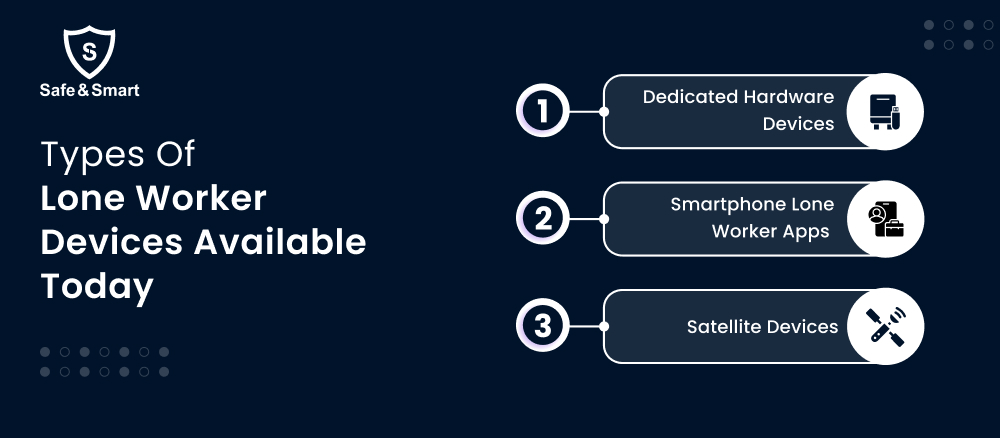
No single type of personal security devices suits every role or working environment. Below are three types of lone worker devices that are available today for users’ safety:
Dedicated hardware devices
The devices are standalone units that don’t depend on a personal mobile phone. They come as ID badge holders with a built-in SOS button, compact fob-style alarms worn on a belt or lanyard, or wristband and smartwatch formats for more active roles.
Smartphone lone worker apps
Apps convert an existing phone into a functional lone worker device, using the phone’s GPS, microphone, and motion sensors. They’re straightforward to roll out, cost-effective, and work well for roles where the risk level is lower.
Satellite devices
Satellite devices are for workers in places where mobile signal simply doesn’t exist. Rather than relying on standard mobile networks, they connect via satellite, which means they work in genuinely remote locations where other lone worker devices would be useless.
In practice, many organisations use more than one type. A field engineer in a high-risk environment might carry a dedicated device, while a remote-working office employee uses an app.
Key Features to Look for in a Lone Worker Device
When comparing lone worker safety devices, a handful of features make the real difference between something that sounds good on paper and something that actually protects people.
- SOS emergency alarm: This is the baseline. One press of a button sends an alert to a monitoring center or escalation contact. In a confrontational situation, drawing attention to the fact that you’re calling for help can make things worse.
- GPS tracking: When an alarm goes off, responders need to know where the worker is. Real-time location data makes that immediate. Especially important outdoors, on site, or anywhere unfamiliar.
- Man-down or fall detection: This is what separates a basic panic button from a more capable lone worker alarm device. If a worker falls and loses consciousness, they can’t press anything. Automatic fall detection triggers an alert anyway, which matters enormously in those situations.
- Two-way audio: A live voice link between the worker and a monitoring operator means the situation can be understood before emergency services are called. Fewer false dispatches, better-matched responses.
- Check-in and timed sessions: A worker sets a session timer for a task. If they don’t check in when it ends, an alert fires. Simple but useful, especially for short visits to unfamiliar locations.
- BS 8484 accreditation: In the UK, this certification connects lone worker solutions to Alarm Receiving Centres that can trigger a Level 1 police response in a genuine emergency. That means bypassing the standard 999 process.
- Duress alarm: A hidden emergency mode that lets a worker appear to cancel an alarm while it carries on running silently. Designed for situations where an attacker might force a worker to “switch it off.”
For personal safety beyond the workplace everyday carry options like a safety keychain are worth looking at alongside any work-focused setup.
Benefits of Using a Lone Worker Device
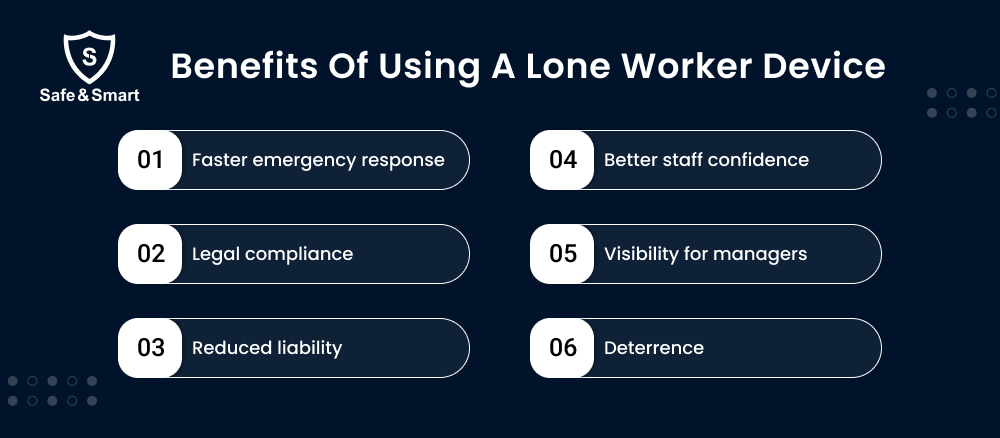
The reasons to invest in lone worker safety devices aren’t just about covering legal bases, though that matters too.
- Faster emergency response: A monitored lone worker device sends location and profile data at the moment the alarm is triggered. The 999 operator delay where time is spent gathering basic details doesn’t happen. In a serious incident, that time matters.
- Legal compliance: Using suitable safety devices for lone workers, alongside proper risk assessments, shows that an employer has taken their HSE obligations seriously.
- Reduced liability: A documented safety approach devices deployed, assessments recorded, and procedures in place make it considerably harder for a duty of care failure to be argued.
- Better staff confidence: Workers who know help is available if something goes wrong tend to feel more settled in their role. That has a real effect on retention and morale, particularly in sectors where lone working comes with the job.
- Visibility for managers: Most current lone worker devices connect to a management platform showing check-in activity, live sessions, and incident history. Supervisors get a picture of what’s happening without needing to check in with everyone individually.
- Deterrence: A visible lone worker alarm device can reduce aggression before it starts. Some workers in customer-facing roles have found that simply mentioning they’re monitored changes the tone of a difficult interaction.
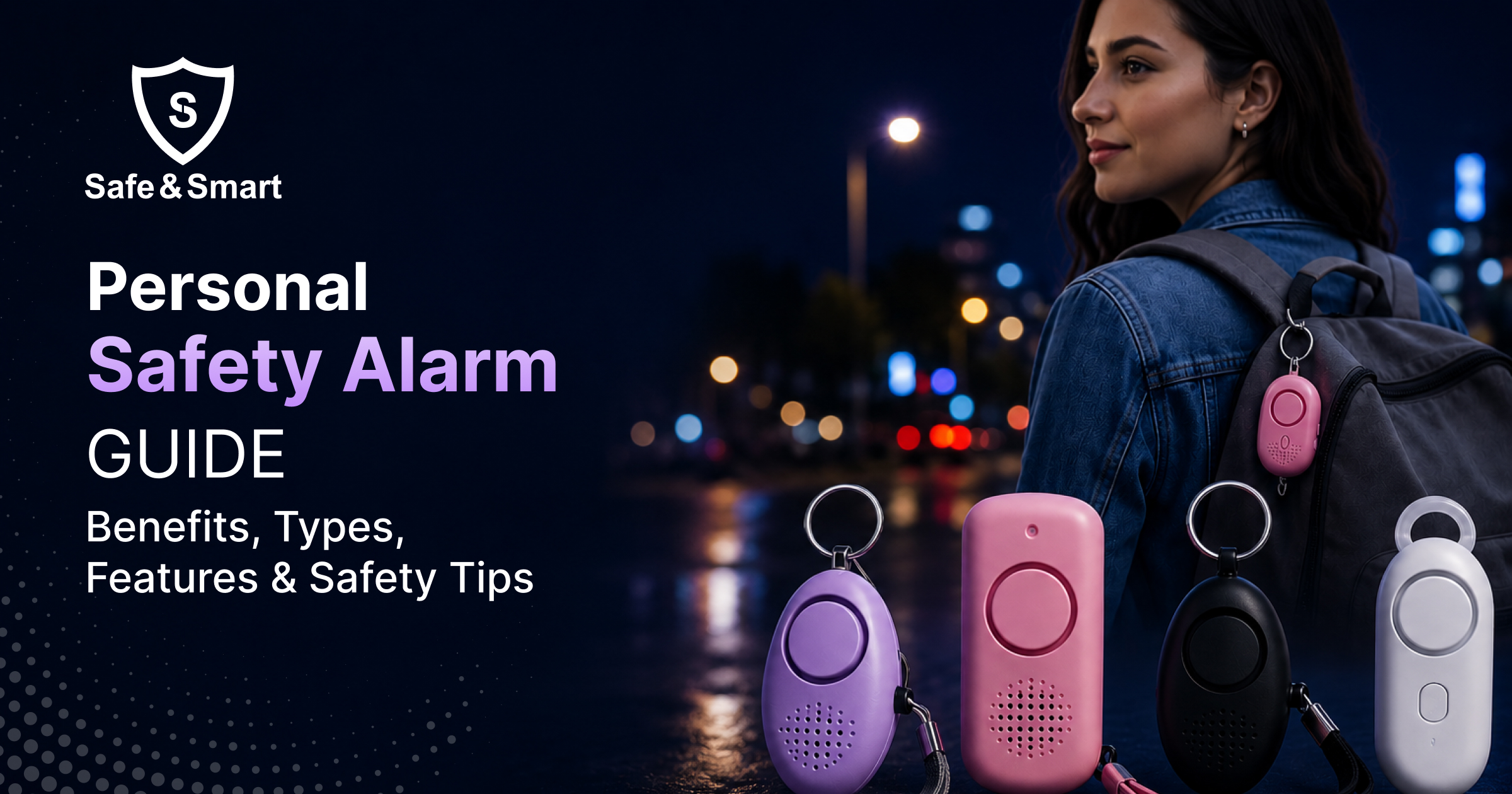
Pairing a lone worker device with broader safety tools, like a personal safety alarm,can round out a more complete personal safety approach.
Safety Applications of Lone Worker Devices Across Industries
Lone worker safety devices are used across a wide range of sectors. The risks differ, but the need is consistent. Below you will learn about some use cases of lone worker device to realize their importance in industries:
Healthcare
District nurses, community mental health workers, and social care staff go into the homes of people who can be unpredictable. A lone worker device gives them a way to call for help without making a tense situation worse. The NHS has been using lone worker solutions for years, and with good reason.
Construction
Working at height, in confined spaces, or on remote infrastructure brings specific risks. Automatic fall detection and man-down alerts are not optional extras here. If a worker is incapacitated on a remote site, the device needs to act on their behalf.
Retail and hospitality
Opening or closing a premises alone, especially during early or late hours, carries real risk. A lone worker alarm device gives those staff a direct connection to help and creates a monitoring record for the whole session.
Education
Site staff, caretakers, and out-of-hours administrators working alone on school or college grounds benefit from check-in monitoring and SOS access, even in what might seem like low-risk environments.
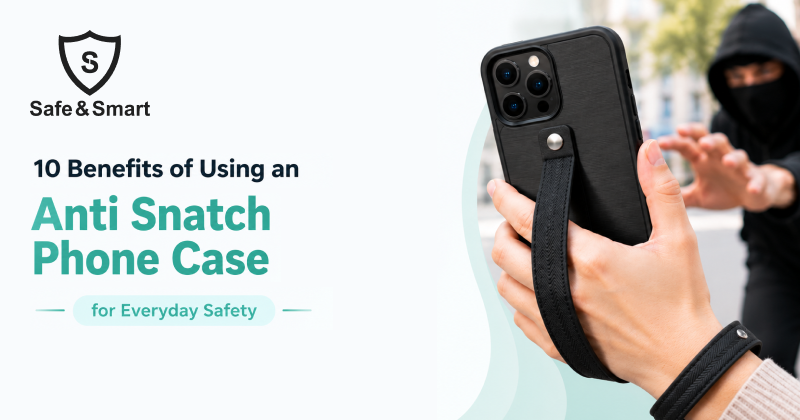
For day-to-day personal safety outside of work, you can prefer a anti snatch phone case that is attachable to your smartphones.
How to Choose the Right Lone Worker Device?
There’s no universal answer, but these are the factors that actually determine whether a device will work for your situation.
Risk profile of the role
Higher-risk roles with physical exposure, remote locations, or regular public contact need dedicated hardware, man-down detection, and BS 8484 accreditation. For lower-risk roles like remote office working, a smartphone app is often enough.
Working environment
Poor or no mobile signal is a dealbreaker for standard app-based lone worker devices. If your staff work in those conditions, you’ll need a satellite device or something with offline alert capability.
Ease of use
A device workers find awkward, bulky, or embarrassing won’t be used consistently. That defeats the point. Compact designs that fit naturally into how someone already works tend to see much better take-up.
Monitoring setup
Self-monitoring means alerts go to a supervisor or colleague. Professional monitoring means a 24/7 ARC with trained operators. For anything beyond low-risk roles, professional monitoring is worth the cost.
BS 8484 accreditation
For lone worker devices UK employers are selecting, this certification is the most reliable indicator that the solution meets serious UK safety standards and that it can deliver faster police response when it’s actually needed.
Conclusion
Around 8 million people in the UK work alone at some point during their working day. For a lot of them, a single incident a fall, a medical emergency, a confrontation could turn serious very quickly without someone nearby to help.
A lone worker device won’t prevent every incident. What it does is make sure that when something happens, the response is fast and the worker isn’t left waiting. Whether that’s a dedicated lone worker personal safety alarm with satellite coverage or a smartphone app for lower-risk roles, the options are more accessible than they’ve ever been.
If your organisation has people working without supervision, the right smart care products isn’t an optional extra. It’s where a genuine duty of care starts.
FAQ
Is it a legal requirement to have a lone worker device? (PAA target)
No, it is not a direct legal requirement to have a lone worker device. However, employers are legally obligated to proactively assess and manage risks for anyone working without close supervision.
How much does a lone worker device cost in the UK?
A professional device for lone workers in the UK typically costs between £100 and £500 upfront, combined with a monthly subscription fee of £5 to £30 per user for continuous monitoring.
Can a lone worker device send emergency SOS alerts?
Yes, all lone worker devices can send emergency SOS alerts, which can be triggered manually or automatically to connect with managers, designated personal contact or 24/7 Alarm Receiving Centers (ARCs).
Are lone worker devices suitable for small businesses?
Lone worker devices are highly suitable and cost-effective for small businesses. Many providers offer flexible, affordable subscription models such as dedicated devices and 24/7 monitoring starting around £14.99 per month.
What features should I look for in a lone worker device?
When evaluating a lone worker device, you should prioritize reliable communication, automated alarms and precise tracking. It includes SOS panic buttons, Man Down detection and GPS location sharing.
Can GPS tracking improve lone worker safety?
Yes, GPS tracking improves lone worker safety by providing them real-time visibility; employers can make sure there is immediate emergency response, monitor remote check-ins and maintain legal compliance.