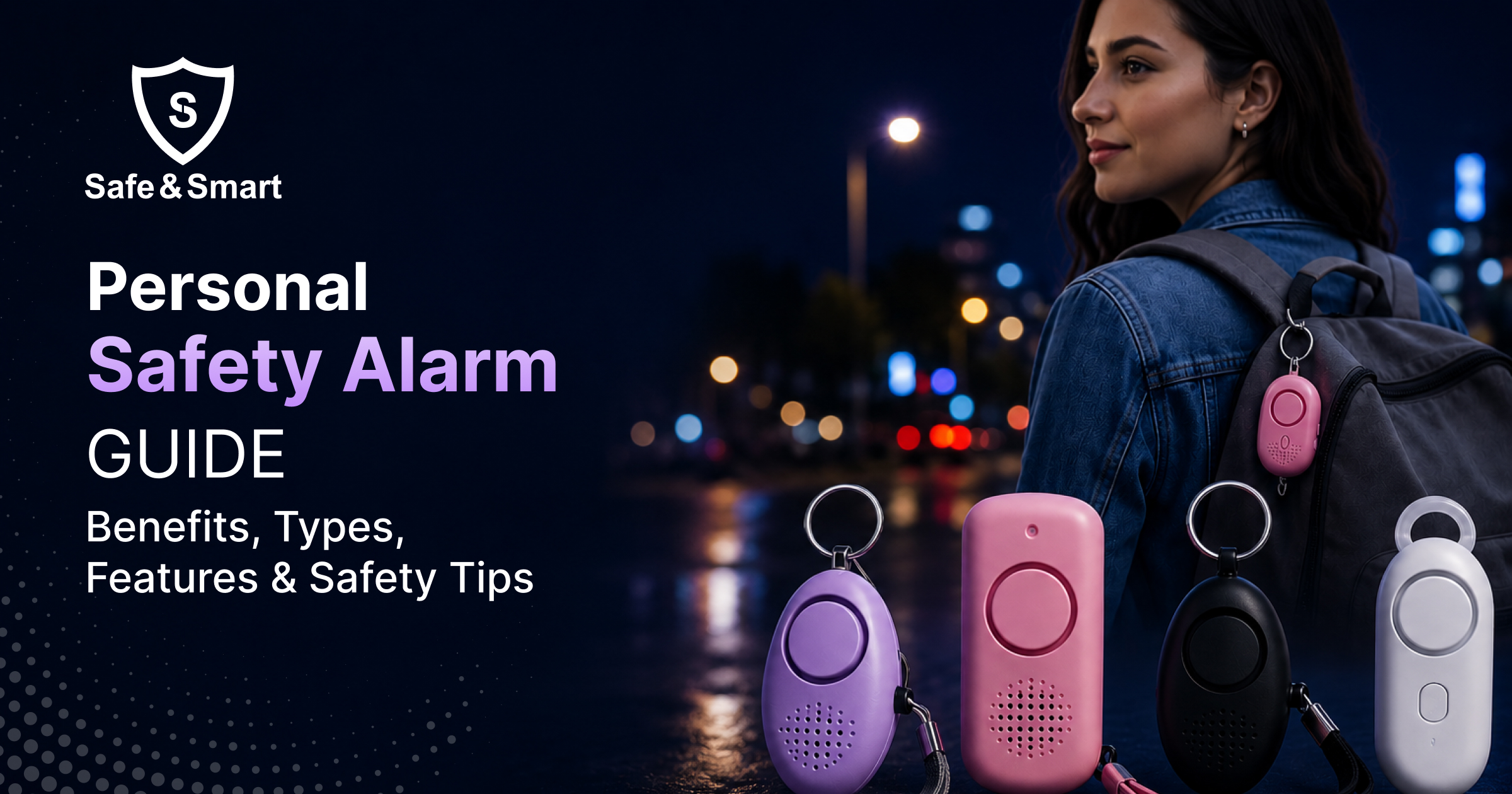
Most people don't think about personal safety until something prompts them to. A walk home that felt off. A late-night commute with no one else around. That moment when you wish you had something, anything to use.
A personal alarm keychain is one of the most practical answers to that feeling. No training needed, no complicated setup, nothing to remember. It’s just a small device that makes a very loud noise exactly when you need it.
In this article, we will discuss what a personal alarm keychain is, how it works, and why more people across the UK and beyond are choosing to carry one every day.
What Is a Personal Alarm Keychain?
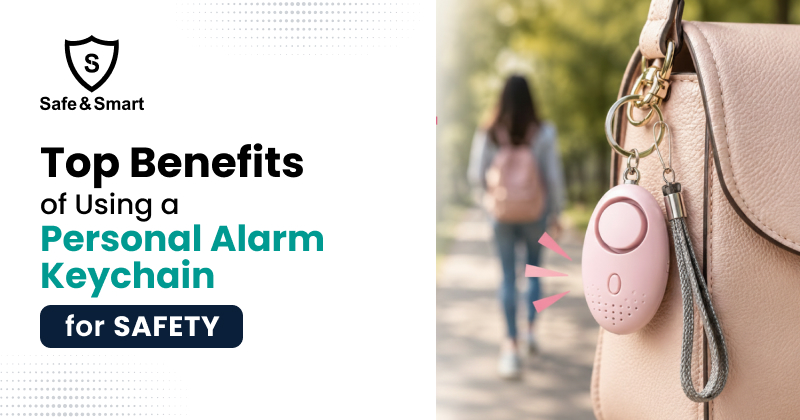
A personal alarm keychain is a compact safety device that emits a loud siren when activated, usually by pulling a pin or pressing a button. Most sit in the 120 to 140 decibel range, which is startling at close range and audible from a serious distance.
The form factor is the key feature. It clips onto keys, a bag strap, or a belt loop. It’s just there. No separate case, no dedicated pocket, no habit to form around it. The smart keychain from Safe&Smart takes it further by pairing a physical alarm with GPS tracking and emergency contact alerts in a single small device.
How Personal Alarm Keychains Provide Instant Protection?
Most threatening situations depend on two things, surprise and isolation. A personal alarm keychain disrupts both at once.
The second it activates, the dynamic shifts. The attacker loses the element of surprise. Bystanders look up. People nearby understand something is wrong, even if they don’t know what. Research from the Journal of Interpersonal Violence found that noise-based deterrents are among the most effective tools in public safety, particularly because they increase bystander intervention.
There’s also the confidence factor. Carrying a personal security alarm makes you feel more aware and in control every day, not just in emergencies.
Key Benefits of Carrying a Personal Alarm Keychain for Safety
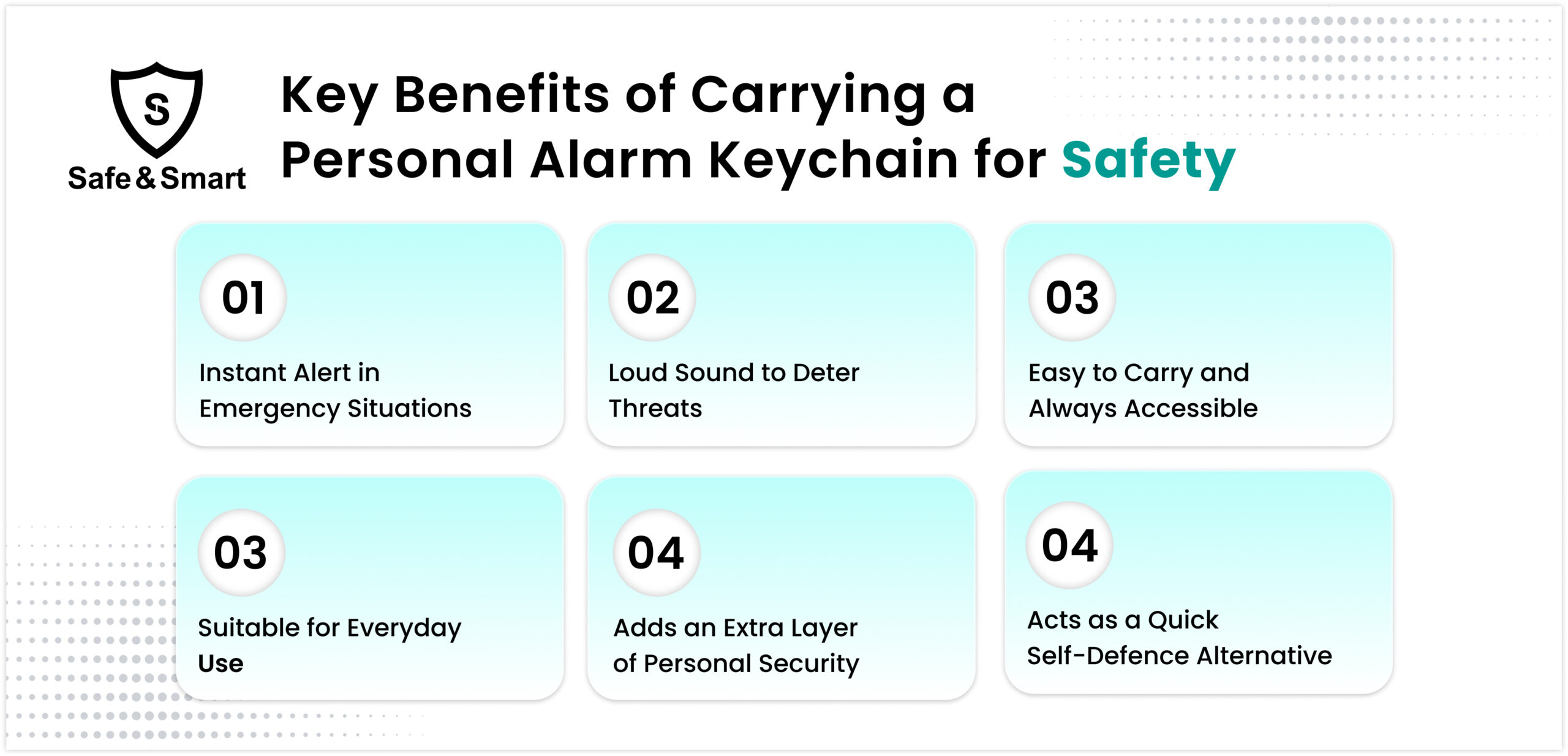
Whether you’re commuting, traveling, or out after dark, a personal safety alarm UK users trust can help you feel more secure and supported. Here are the reasons why you should carry the emergency personal alarm keychain:
1. Instant Alert in Emergency Situations
In a real emergency, you don’t get time to think through options. A personal alarm keychain activates in under a second, with no unlocking a screen and no typing anything. One motion and it’s going. That immediacy is precisely what matters when something goes wrong fast.
2. Loud Sound to Deter Threats
At 120–140 dB, these alarms are loud in a way that’s hard to describe unless you’ve been near one, roughly equivalent to a jackhammer at close range. According to the Suzy Lamplugh Trust, over 40% of women in the UK have experienced harassment in public spaces. A sudden, piercing alarm in that context doesn’t just draw attention; it changes the whole situation.
3. Easy to Carry and Always Accessible
This benefit is one of the strongest arguments for the keychain format. A personal alarm keychain doesn’t need its own space. If your keys are in your bag, your alarm is too. No decision, no separate habit. That passive accessibility is exactly what you want from a safety tool.
4. Suitable for Everyday Use
Personal safety alarms aren’t just for high-risk situations. People carry them on morning runs, evening dog walks, and late commutes, not because they expect trouble, but because being prepared costs nothing. It’s discreet, lightweight, and completely unobtrusive until you need it.
5. Adds an Extra Layer of Personal Security
No single tool covers everything, but combining a personal alarm keychain with other precautions and Personal Safety Devices creates a more complete personal security setup. This device is one layer in a wider approach, which is exactly how it should be used.
6. Acts as a Quick Self-Defence Alternative
Pepper spray is restricted in the UK, although stun guns are illegal to carry. A personal safety alarm that UK residents can legally carry anywhere, without question, and without risk of it being used against them. For many people, this is the most sensible self-defense option available. No training, no legal grey areas.
Who Should Carry a Personal Alarm Keychain and Why?
While a personal alarm keychain can be useful for almost anyone, some people are more likely to need one nearby, such as:
1. Students and Young Adults
New cities, unfamiliar routes, and late nights. Students away from home for the first time are in situations where an emergency personal alarm keychain genuinely earns its place. Small enough to never be inconvenient, important enough to matter if something goes wrong.
2. Women Traveling Alone
ONS crime data consistently shows women face a significantly higher risk of public harassment and assault. Personal safety alarms are now regularly recommended for women traveling solo, whether that’s a holiday abroad or just the walk back from a late shift.
3. Daily Commuters in Busy Urban Areas
Busy rush-hour platforms feel safe. An empty station at night feels very different. A personal security alarm on your keychain covers both ends of that spectrum and every stop in between.
4. Travelers and Tourists
Somewhere unfamiliar, possibly with a language barrier, and no clear sense of which areas are safe. A 130 dB alarm doesn’t need translating. It communicates distress immediately, wherever you happen to be.
5. Night Shift Workers
NHS staff, warehouse workers, and hospitality employees finish late at night. Millions of people in the UK travel home in the early hours when fewer people are around. For them, personal safety alarms aren’t a theoretical precaution; they’re a practical tool for everyday situations.
Personal Alarm Keychain vs Mobile Safety Apps: Which Is Better?
Safety apps have genuine value, such as GPS sharing, automated SOS texts, and check-in reminders. Useful features, no question. But they depend entirely on your phone being charged, unlocked, and reachable. In a genuine emergency, that’s not always the case.
A personal alarm keychain sidesteps all of it. No battery to monitor, no screen to navigate, no signal needed. It activates immediately, which is the one thing that actually counts in the moment.
The two aren’t in competition, though. Use both. A safety app handles monitoring and communication; a personal alarm keychain handles immediate prevention. Devices like the smart keychain already combine both functions, so it’s worth knowing about them if you want one device that does the full job.
How Safe&SmartOne Helps You Stay Safe Anytime, Anywhere?
Safe&Smart builds personal safety devices designed for actual daily use, not something you charge once and forget about, and not something so bulky it stays in a drawer.
Their smart keychain pairs a high-decibel alarm with GPS tracking and emergency contact notifications. Whether you’re buying for yourself, a student heading to university, or a family member living alone, it’s designed to be carried and relied on. Reading their related content on Personal Safety Devices can provide a clearer understanding of what a complete setup entails.
Conclusion
A personal alarm keychain is a small, legal, affordable device that makes a very loud noise when you need it. That’s the whole idea, and it works. No training required, no legal considerations, no maintenance burden to speak of.
For students, solo travelers, commuters, night-shift workers, or anyone who spends time in public, personal safety alarms offer a real layer of protection at almost no cost or effort. It’s a practical step, not a dramatic one. And sometimes people actually take the practical steps.
FAQ
How loud is a personal alarm keychain?
Most models emit 120–140 decibels, comparable in intensity to a jet engine at close range and audible from considerable distances.
Do personal alarm keychains need charging?
Most run on standard replaceable batteries. Some smart models require occasional USB charging, but standard versions need no charging at all.
Can it work without a smartphone?
Yes, completely. A standard personal alarm keychain works entirely independently, with no phone, no app, and no signal required.
Is it effective in real emergency situations?
Yes. The loud siren deters threats, immediately draws bystanders' attention, and buys you critical time without requiring any physical strength or training.