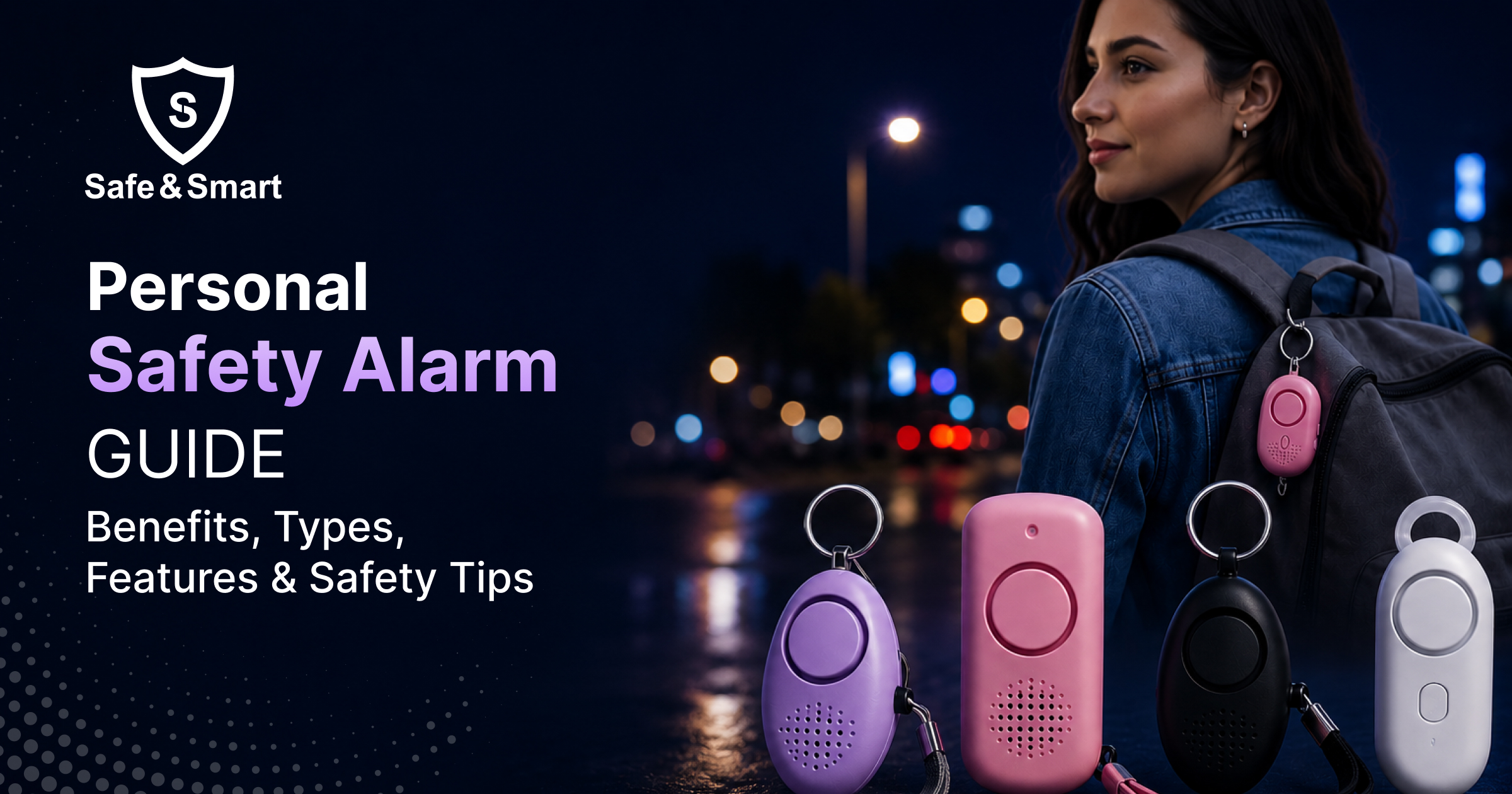
People think about personal safety differently than they did a few years ago. A device that once appeared relevant only for solo workers or older adults now sits on keyrings, backpacks, gym bags, and running belts. For many, carrying a personal safety alarm has become as routine as carrying a phone or a set of keys.
The reason is simple. People talk about personal safety more on a day-to-day basis. People think more carefully about where they park, which route they take, and who knows where they are. According to UK government polling released in 2026, 88% of women have felt unsafe while walking at night. The same research found that 71% have changed their route to avoid walking in the dark.
While no device can remove every risk, a personal safety alarm can help you react quickly when a situation feels wrong. This blog helps you to understand how these alarms work, the different types available, the features worth paying attention to, and how to choose one that fits your daily schedule.
What Is a Personal Safety Alarm and How Does It Work?
Most people hope they never have to use a personal safety alarm. The device usually sits unnoticed on a keyring, in a pocket, or attached to a bag until a moment arises when attracting attention quickly becomes important.
A personal safety alarm has one main purpose. It makes a very loud noise. Instead of relying on physical strength or self-defence skills, it helps to grab the attention of people nearby. In a crowded street, car park, public transport station, or walking route, that sudden sound can make others aware that something is wrong.
The way it works is usually easy to understand. Some alarms activate when a pin is pulled from the device. Others use a button that can be pressed in seconds. Once activated, the siren continues until the alarm is switched off or reset.
Many newer models go beyond a loud alarm. Depending on the device, you might see features like GPS tracking, location sharing, mobile app connectivity, or emergency contact alerts. These additions can be useful for students, commuters, runners, lone workers, and anyone who spends time alone.
Types of Personal Safety Alarms for Everyday Protection
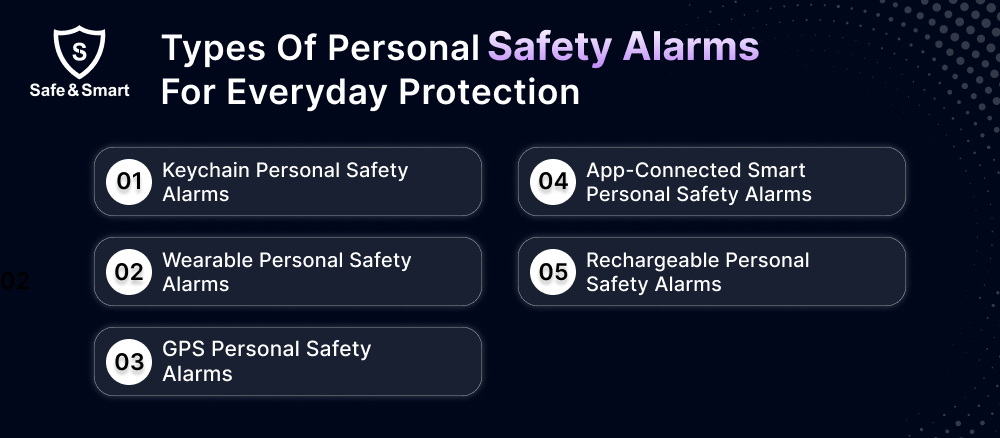
People choose a personal security alarm for different reasons. Some people want something simple that stays on their keys. Some want additional features, such as GPS tracking or linking to their cell phones. Familiarising yourself with the main types can help you select an alarm that suits your daily routine and comfort level.
Keychain Personal Safety Alarms
A keychain alarm is the easiest for many people to carry around with them all day long. You can attach it to keys, bags, backpacks, or luggage so that you can grab it quickly when you need it. Most of the models are pull-pin and make a loud siren. Their small size and ease of use make them a popular choice for students, working people, and travellers who want a simple personal security alarm.
Wearable Personal Safety Alarms
Some people prefer an alarm they can wear instead of carrying in a bag or pocket. Wearable personal safety alarms are available as wristbands, pendants, clips, and similar accessories. The device remains close by and is therefore used by runners, walkers, and the elderly. It’s easier to use the alarm if you have it with you when you start to feel uncomfortable or unsafe.
GPS Personal Safety Alarms
A GPS personal safety alarm combines a loud siren with location-sharing features. This can be helpful when someone needs assistance, and their location is not immediately known. Many lone workers, travellers, and older adults choose this type of alarm. A modern personal GPS tracking device can also help trusted contacts see where a person is during an emergency, providing an extra layer of comfort.
App-Connected Smart Personal Safety Alarms
App-linked alarms add safety features through a smartphone. Mobile app features will vary by model, but users may be able to send alerts, share location, and manage emergency contacts. With the increased use of smartphones, these devices have become more practical. With Ofcom reporting that more than 90% of UK adults now have a smartphone, the practicality of app-connected safety devices for everyday use is growing.
Rechargeable Personal Safety Alarms
Rechargeable personal safety alarms are meant for people who would rather not change batteries regularly. Instead, it can be charged like a mobile phone when needed. Many rechargeable models also come with LED lights, SOS functions, and smart connectivity. For people who carry an alarm every day, it can be more convenient to be able to recharge the device than to have to keep track of battery replacements.
Key Features to Look for in a Personal Safety Alarm
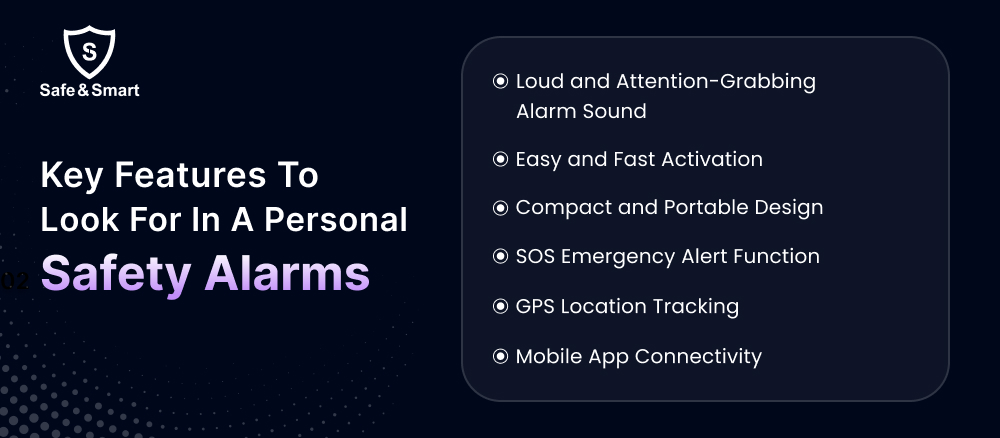
It is easy to get caught up in extra features when comparing personal safety alarms. Most of the time, the things that matter most are much simpler. You want an alarm that is easy to carry, easy to use, and ready when you need it. A few practical features can make a bigger difference than a long list of specifications.
Loud and Attention-Grabbing Alarm Sound
The main job of a personal safety alarm is to attract attention. If people nearby do not hear it, the alarm cannot do much to help. The loudest personal safety alarms are 120 to 140 decibels, which is loud enough to be heard. Busy streets, car parks, train stations, and public spaces can all be noisy, so a strong alarm sound gives you a better chance of being noticed when it matters.
Easy and Fast Activation
A safety alarm should not require instructions at the moment you need it. Many devices use a pull pin or a single button, allowing the alarm to sound almost immediately. Simple designs are usually the easiest to use under pressure.
Compact and Portable Design
If an alarm is heavy or inconvenient, there is a good chance it will be left at home. Compact models are easier to keep on a keyring, inside a pocket, or attached to a bag. Having the alarm close by is what makes it useful.
SOS Emergency Alert Function
Some alarms include an SOS feature that can do more than sound a siren. Depending on the model, it helps you notify emergency contacts or trigger other alerts. The SOS emergency alert function is useful for people who spend most of their time alone or travel.
GPS Location Tracking
A loud alarm can help attract attention, but there are times when knowing someone’s location matters just as much. If a person is travelling alone, working remotely, or spending time in an unfamiliar area, location sharing can make it easier for trusted contacts to understand where help may be needed. It is a feature many people appreciate, not because they expect to use it often, but because it can provide extra reassurance when plans do not go as expected.
Mobile App Connectivity
Some personal safety alarms connect to a mobile app, and that’s why anyone can manage emergency contacts, adjust settings easily, and access other safety features from their phone. Mobile app connectivity is something that is easy to handle and familiar since many people already use apps for their everyday tasks.
Top Benefits of Using a Personal Safety Alarm
People buy a personal safety alarm for all sorts of reasons. Some carry one during their daily commute. Others keep one on a keyring for late walks, travel, or simply for extra reassurance. It is a small device, but it can make people feel more prepared when they are on their own.
Instant Access to Help in an Emergency
When something unexpected happens, there is not always time to think through your next step. A personal safety alarm gives you a quick way to let others know you may need help. You do not need to unlock a phone or search for a contact. The alarm is there and ready to use.
Helps Attract Attention During Emergencies
In many cases, the first thing to do is get noticed. A loud alarm can break the silence, draw the attention away from people nearby, and alert others to the fact that something may be wrong. Sometimes that alone can make a huge difference.
Suitable for People of All Ages
One of the reasons personal safety alarms are so widely used is that they are easy to understand. Students, older adults, commuters, travellers, and lone workers can all use them without needing any special training or technical knowledge.
Provides Peace of Mind for Families
It is not only reassuring for the person carrying the personal safety alarm. If a family member needs help or feels unsafe, it’s good to know that there’s a simple and effective way to get attention for their loved one.
Perfect for Women Walking Alone
A lot of women take extra precautions when walking alone, especially if it is dark or in an unfamiliar area. A personal safety alarm won’t eliminate all risk, but it can provide an extra sense of confidence and a practical way to respond if a situation starts to feel uncomfortable.
Personal Safety Alarm vs. Other Personal Safety Devices
There are several personal security devices out there in the world today, and each one is meant to do a little something different. Some are designed to help people share their location, while others are built to catch attention quickly. One option is a personal safety alarm, but it’s worth thinking about how it compares with other devices people commonly use.
| Feature |
Personal Safety Alarm |
Safety Apps |
GPS Trackers |
Smart Safety Devices |
| Attracts Attention |
Yes |
No |
No |
Some models |
| Location Sharing |
Some models |
Yes |
Yes |
Yes |
| Requires Smartphone |
Not always |
Yes |
Not always |
Often |
| Easy to Activate |
Yes |
Depends on phone access |
Yes |
Varies by device |
| Works Without Internet |
Usually |
Not always |
Some models |
Depends on the device |
| Best For |
Everyday personal safety |
Alerts and communication |
Location monitoring |
Advanced safety features |
The biggest difference comes down to what you want the device to do. A safety app can help you stay connected with friends or family. A GPS tracker is useful when location sharing is the priority. Smart safety devices bring several features together, though they can take a little more setup.
A personal safety alarm tends to appeal to people who want something simple. If you need it, you can activate it in seconds without opening an app or relying completely on a phone signal. Some people also use other tools alongside their alarm, such as safety apps, tracking devices, or even an anti-theft phone case, to build a personal safety setup that fits their everyday life.
Essential Safety Tips for Using a Personal Alarm
The whole point of a personal alarm is that it is ready to use at any moment’s notice. A few simple habits can help ensure the device works as you expect when you need it.
- Keep Your Alarm Accessible: Have your alarm ready, on a key ring, on a bag strap, or in your jacket pocket, for example. If it’s at the bottom of a bag, it might be more difficult to access in a stressful situation.
- Test It Regularly: A good idea is to test your alarm now and then to see that it’s working. Regular checks also help you understand how the device works.
- Keep the Battery Charged: A dead battery doesn’t help a personal alarm. If you have a rechargeable model, make charging a part of your routine. Check the battery from time to time for battery-powered devices and replace it if necessary.
- Share Emergency Contacts: If your alarm includes emergency contact capabilities, make sure your info is current. It’s also a good idea to tell trusted friends or family what you plan to do when travelling alone.
- Know how to Activate It: They work differently with the alarms. Some have a pull pin; some have a button or SOS trigger. If you are in a hurry and need to use your device, knowing how it works for a few minutes can help.
How to Choose the Right Personal Safety Alarm?
When choosing a personal safety alarm, it helps to think about how and where you are likely to use it. The right device for a student travelling home at night may not be the same as the one a lone worker or frequent traveller would choose.
Start with the basics. A loud alarm is important because its main job is to attract attention. You should also consider battery life. If an alarm needs too many charges or too many battery changes, there’s a higher chance it won’t be noticed when you need it the most.
Some people want additional features like GPS tracking, SOS alerts, or mobile connectivity. They can be useful if you spend a lot of time alone or want trusted contacts to be able to respond faster in an emergency situation.
Ease of use is as important a feature as any other. In a high-stress moment, nobody wants to have to figure out complicated controls. The simplest button or pull-pin design is usually the easiest option.
If you want to know the best personal attack alarms UK shoppers can buy, check out the reliability, comfort, and everyday practicality. Many also try other smart care products, but the best one is usually the one you are confident carrying and using every day.
Conclusion
Most people hope they never have a reason to use a personal safety alarm. That is really the point. It sits on a keyring, in a pocket, or attached to a bag and becomes part of everyday life until the moment it is needed. The trick is to pick a device you’re going to actually carry. For some people, that’s a simple alarm with a loud siren. Others are more comfortable with features such as GPS tracking, SOS alerts, or mobile connectivity. There is no one right answer. A personal safety alarm will not remove every risk, but it can give you a simple way to respond when a situation feels wrong. Sometimes, knowing you have that option close by is reason enough to carry one.
FAQ
How loud is a personal safety alarm?
Most personal safety alarms produce a sound between 120 and 140 decibels. The exact volume depends on the model, but the alarms are designed to quickly grab attention and alert people nearby.
Are personal safety alarms legal in the UK?
Yes. It is legal to carry and use a personal safety alarm in the UK. They are a popular choice for personal safety because they are designed to attract attention in an emergency, not to cause harm.
Who should use a personal safety alarm?
Personal safety alarms can be useful for students, commuters, lone workers, travellers, runners, older adults, and anyone who spends time alone. Many people carry one simply for added reassurance during everyday activities.
Do personal safety alarms work without a mobile phone?
Yes. Most personal safety alarms are standalone devices, so they don’t require a mobile phone, internet connection, or mobile app to operate. If they are tripped, they set off a loud siren. Some of the higher-end models have more connected features.
How long do personal safety alarm batteries last?
The battery life depends on the device. Some alarms will operate for months or years before it’s time to change the battery, and rechargeable models may need to be charged more frequently.
Can a personal safety alarm detect falls automatically?
Some sophisticated personal alarms come with automatic fall detection technology. These devices are able to send an alarm when they sense a fall. Most personal safety alarms on the market today require the user to activate them.