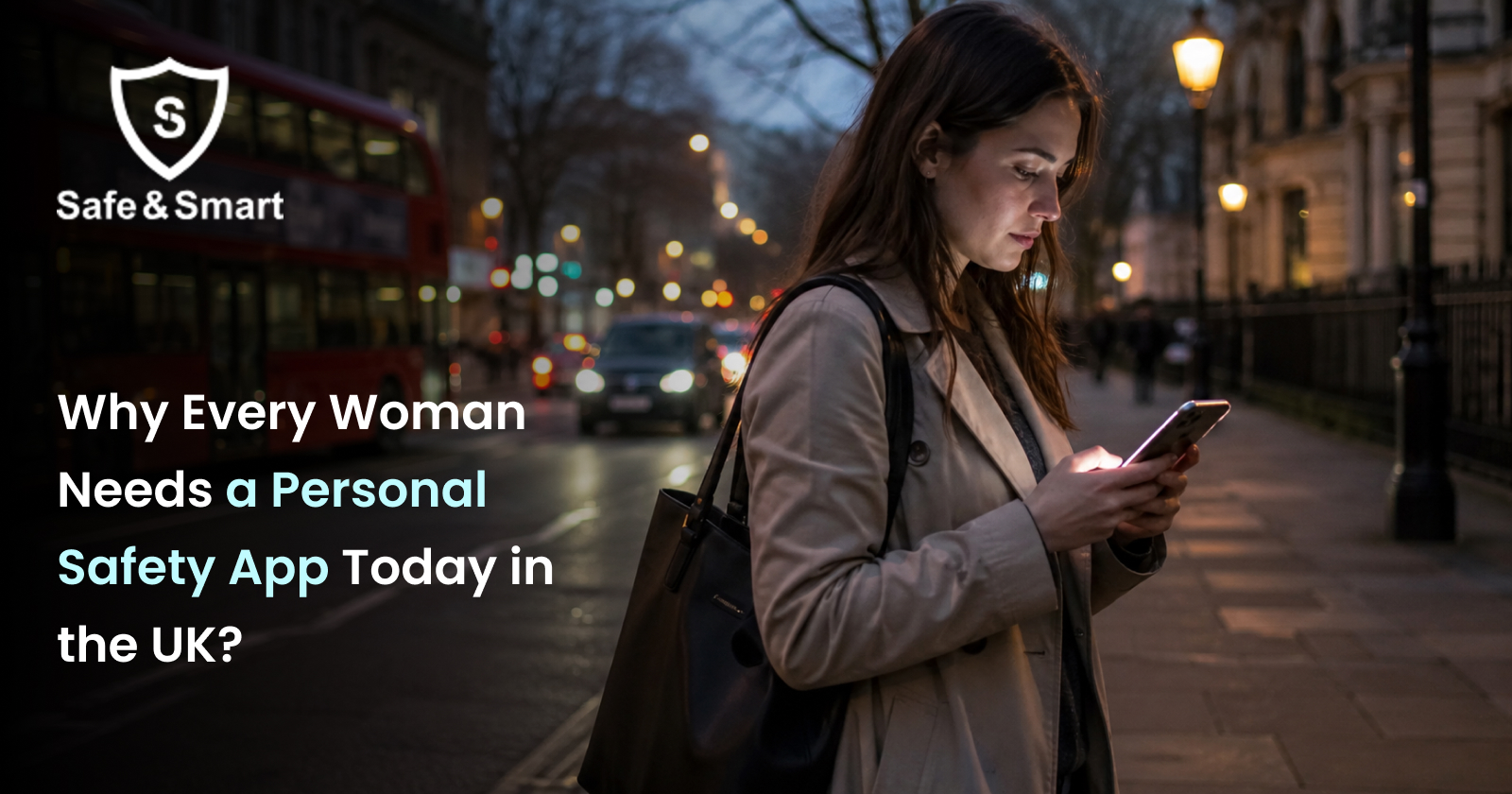
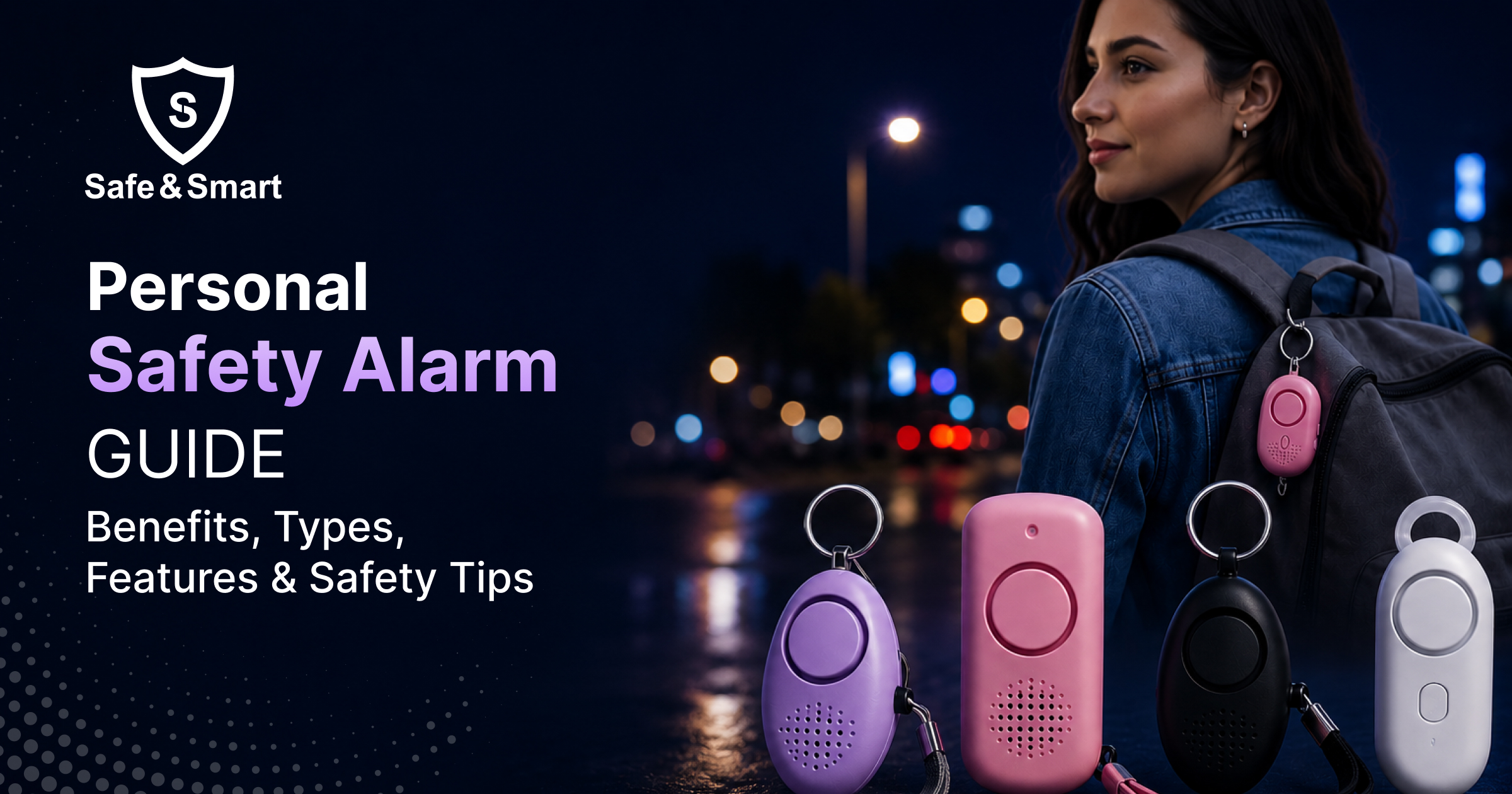
Let's be honest. Most women in the UK have had at least one moment where they felt unsafe. Maybe it was walking back from a night out, waiting for a cab in an unfamiliar area, or simply being followed home by someone they didn't know. These moments don't always make the news. But they stay with you.
The conversation around women’s safety in the UK is getting louder and rightly so. More women are speaking up, more data is being collected, and more people are looking for real, practical answers. One of the most accessible answers right now is sitting in your pocket. A personal safety app won’t change the world overnight, but it can genuinely change what happens in those moments that matter most.
This blog breaks down why these apps have become so important, what they actually do, and which situations they’re most useful in.
Growing Safety Concerns for Women in the UK
The numbers are impossible to look away from. According to the Domestic Abuse Commissioner, over 2.2 million women experienced domestic abuse in the year to march 2025 alone. It goes beyond domestic settings too. Women are far more likely than men to experience stalking, sexual assault, and harassment within a given year.
Nearly 72% of women felt unsafe or very unsafe after dark. Not occasionally. Regularly. That means the majority of women are already adjusting their lives around fear taking longer routes, avoiding certain areas, and texting a friend when they get home.
That shouldn’t be normal. But here we are.
Some things take time to change. Policy, culture, and accountability are long processes. But what women can do right now is make sure they have the right tools close at hand. That’s where safety apps for women come into the picture.
What Is a Personal Safety App and How Does It Work?
A personal safety app is a mobile application designed to provide security and assistance during emergencies, dangerous situations, or daily travel. It turns your smartphone into a digital bodyguard, offering features like live location sharing, emergency SOS triggers and silent alarms to keep you safe.
These apps operate through a mix of user interaction and background tracking:
- Emergency Triggers: The users can tap a button or use gestures to activate an alert.
- Live Tracking: These apps share your real-time GPS with pre-selected trusted contacts.
- Discreet Modes: There are many apps that feature a “stealth mode” and silently record video evidence.
- Safety Checks: You can set a timer when walking alone; if you do not arrive and turn the timer off, your contact is notified.
This is the working process of these apps that is used to protect women in sensitive situations when they feel unsafe.
5 Major Reasons to Download a Safety App Today
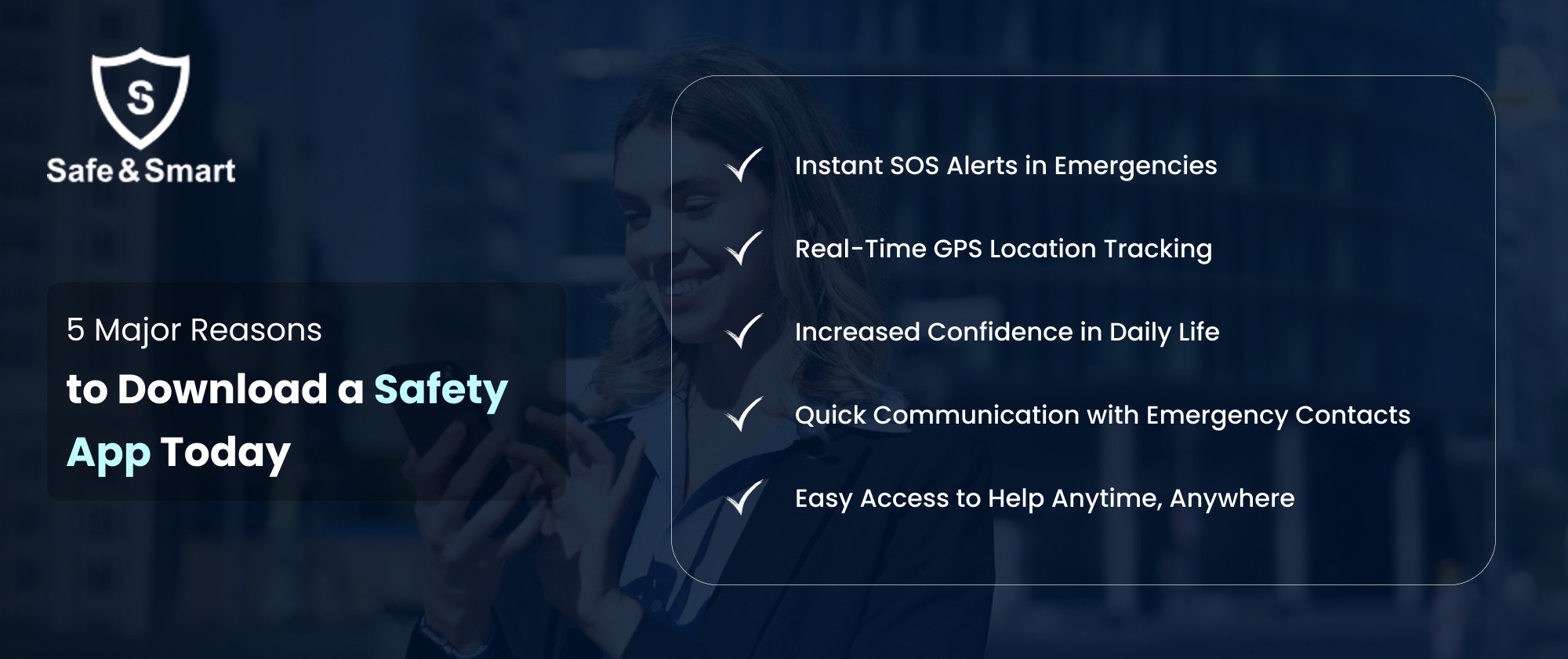
There are plenty of reasons women are downloading personal safety apps in growing numbers. These are five reasons that come up most often and honestly, each one on its own is enough.
1. Instant SOS Alerts in Emergencies
When something goes wrong, the last thing you want to be doing is typing or scrolling. A personal safety app sends a full SOS alert to your emergency contacts in one press. Your location goes with it. No explanation needed, no waiting for someone to pick up.
Some apps even have a silent alert option, which is worth thinking about. If someone is nearby and you don’t want them to know you’re calling for help, a discreet tap is all it takes. The alert goes out without a sound.
2. Real-Time GPS Location Tracking
Location sharing gets a bad reputation sometimes, but in the right context it’s one of the most practical safety features going. With a personal safety app, the people you choose can see exactly where you are throughout a journey.
Safety apps for women are useful because they don’t require you to remember to update anyone. Your location is shared automatically. If you stop moving somewhere unexpected, or your route suddenly changes, your contacts are told.
3. Increased Confidence in Daily Life
This one is less obvious but just as important. When women feel unsafe, they sometimes change their behaviour quite dramatically. They avoid certain streets, they leave events early, and they say no to things they’d actually like to do. That’s a quiet kind of loss that rarely gets talked about.
Having a personal safety app doesn’t eliminate risk. But knowing that help is one tap away does something real to how you feel walking home at night. It shifts the balance. Women who use safety apps consistently report feeling more confident going out alone.
4. Quick Communication with Emergency Contacts
Calling 999 is the right move in many situations, but it’s not always the first thing that helps. In some scenarios, especially when you’re unsure if something is wrong or want to avoid escalation, reaching your personal contacts first is more useful.
With the help of a safety app, your contacts get your GPS location, a notification, and in some cases, an audio recording, all at the same time. Safety apps for women are built with this in mind not just to replace emergency services.
5. Easy Access to Help Anytime, Anywhere
A personal safety app doesn’t sleep, doesn’t need charging separately, and doesn’t live at the bottom of your bag like a personal alarm. It’s on your phone, the thing that’s already in your hand most of the time anyway.
That consistent availability matters. Whether you’re on a solo trip, working late, or just popping out for a run at 7am, the app is there. There’s no setup required in the moment and no equipment to remember for personal safety devices and apps.
Personal Safety App vs Smart Safety Devices: What’s the Difference?
People often ask whether they should get an app, a physical device, or both. Honestly, both have their place, but they work quite differently. Here’s a straightforward comparison.
| Feature |
Personal Safety App |
Smart Safety Device |
| Form Factor |
Smartphone app |
Physical device (wearable, keyring, button) |
| Cost |
Free or low monthly subscription |
One-time hardware cost (£30 to £150+) |
| SOS Alerts |
Yes, via app button |
Yes, physical button or sensor |
| GPS Tracking |
Yes, real-time on the phone. |
Yes, built-in GPS (varies by device) |
| Ease of Use |
Requires smartphone |
Works independently of phone |
| Discreet Use |
Moderate, phone must be accessible |
High, can be hidden in clothing or bag |
| Battery Dependency |
Relies on phone battery |
Separate battery, often long-lasting |
| Additional Features |
Audio/video recording, check-in timers, contact management |
Limited to core alert function |
| Best For |
Everyday use, most users |
Those wanting a phone-free dedicated device |
For most women, a personal safety app is the natural starting point. The smart care products are worth considering as a backup, particularly for situations where your phone might not be easily accessible.
Real-Life Situations Where a Personal Safety App Can Help
It’s one thing to understand how an app works in theory. It’s another to picture where it actually fits into real life. These are the situations where safety apps for women tend to make the most significant difference.
1. Traveling Alone at Night
Night-time travel is probably the most common concern among women in the UK. Walking home after a late shift, leaving a friend’s house at 11pm, or getting off a train at a quiet station, these situations carry a different kind of weight for women than they do for men.
A personal safety app lets you set a journey timer before you set off. Your contacts follow your location in real time. If anything happens or you stop responding, they’re alerted right away. It’s not about being fearful. It’s about being prepared.
2. Using Taxis or Ride-Sharing Services
Most taxi journeys are completely fine. But getting into a car with a stranger is still a risk, and it’s reasonable to want someone else to know where you are while it happens.
With a safety app, you can share your live route with a contact for the whole journey. The apps that include destination-setting features will flag up immediately if your route changes unexpectedly. That visibility alone is worth a lot.
3. Walking in Isolated or Unfamiliar Areas
A new city, a new neighborhood, and a late evening walk through an unfamiliar area are situations that most people encounter fairly regularly. And often they are completely fine. But “usually fine” isn’t the same as “protected.”
A personal safety app runs in the background while you’re on the move. Your contacts can see your route without you having to keep messaging them. And if something feels off and you trigger an SOS, it’s immediate and silent.
4. Emergency or Threatening Situations
Some situations go from uncomfortable to dangerous very quickly. Someone following you, a confrontation that’s escalating, a feeling that something is seriously wrong. These are the moments where a safety app earns its place entirely.
One tap sends your location, triggers an alert, and in many cases starts an audio recording. Safety apps for women are designed specifically for these high-pressure moments where you don’t have time to think about what to do next.
5. Living Alone
Living alone has many advantages, but it also comes with a specific vulnerability. If something goes wrong at home like a fall, a health issue, or someone at the door who frightens you, there’s no one there to notice.
A safety app used as a daily check-in tool helps fill that gap. Set a morning or evening timer. Confirm you’re okay when it runs out. If you don’t, your contacts are told. It’s a simple habit that gives both you and the people who care about you a bit of genuine reassurance.
How Safety Apps from Safe&SmartOne Help Women Stay Safe?
Safe&SmartOne built their personal safety app with UK women in mind from the start. The focus was on making something that actually works in the moments it needs to, not something with a long list of features that takes ten minutes to figure out when you’re already stressed.
The SOS alert is immediate. When triggered, your emergency contacts receive your exact GPS location right away. There’s no delay, no confirmation screen to navigate.
The trusted contact network is straightforward to set up. You choose who’s in it, and when you send an alert, everyone in that network gets notified at the same time. More people knowing means a faster response.
The app runs in the background round the clock. Students, professionals, solo travelers, and anyone living alone: the personal safety app works for all of them without needing to adapt or compromise on how it fits into daily life.
We also provide safety devices including an anti-theft phone case and a personal alarm keychain that you can carry anywhere. We launched these products because you all know that phone snatchers target the phones first and these devices are easily accessible during emergencies.
Final Thoughts
Women in the UK are dealing with a genuine and ongoing safety problem nowadays. The statistics back that up, and so do the everyday experiences that never make it into any report. A personal safety app isn’t a solution to all of it. But it is a practical, accessible, and immediate way to protect yourself better right now.
As research from the UK Parliament continues to document, violence against women and girls is still a national emergency. Technology alone won’t fix that. But having the right tool on your phone could make a real difference when it counts.
Download a personal safety app, set up your contacts, and get familiar with how it works before you need it. That’s it. Small step, real impact.
Stay safe. Stay smart. Stay connected.
FAQ
Do personal safety apps work without the internet?
Most personal safety apps need an active internet connection to share real-time GPS tracking, record to the cloud, or send alerts. However, some apps have built-in workarounds or alternative features to keep your app protected even when you are offline.
Can a personal safety app help during night travel?
Yes, personal safety apps are practical tools for night travel. They provide proactive security by notifying trusted contacts if you fail to arrive on time, granting immediate SOS access and tracking your live GPS location if you feel unsafe.
How accurate is GPS tracking in safety apps?
GPS tracking in safety apps is generally accurate to within 3 to 10 meters when outdoors. However, precision drops significantly in dense urban areas, indoors or in heavily wooded terrains. Apps rely on a combination of GPS, Wi-Fi and cellular data.
Do personal safety apps drain the battery quickly?
The personal safety apps can drain your battery quickly because they frequently run in the background and rely on your phone’s GPS to constantly track your location. Their overall power consumption depends heavily on the app's specific device.